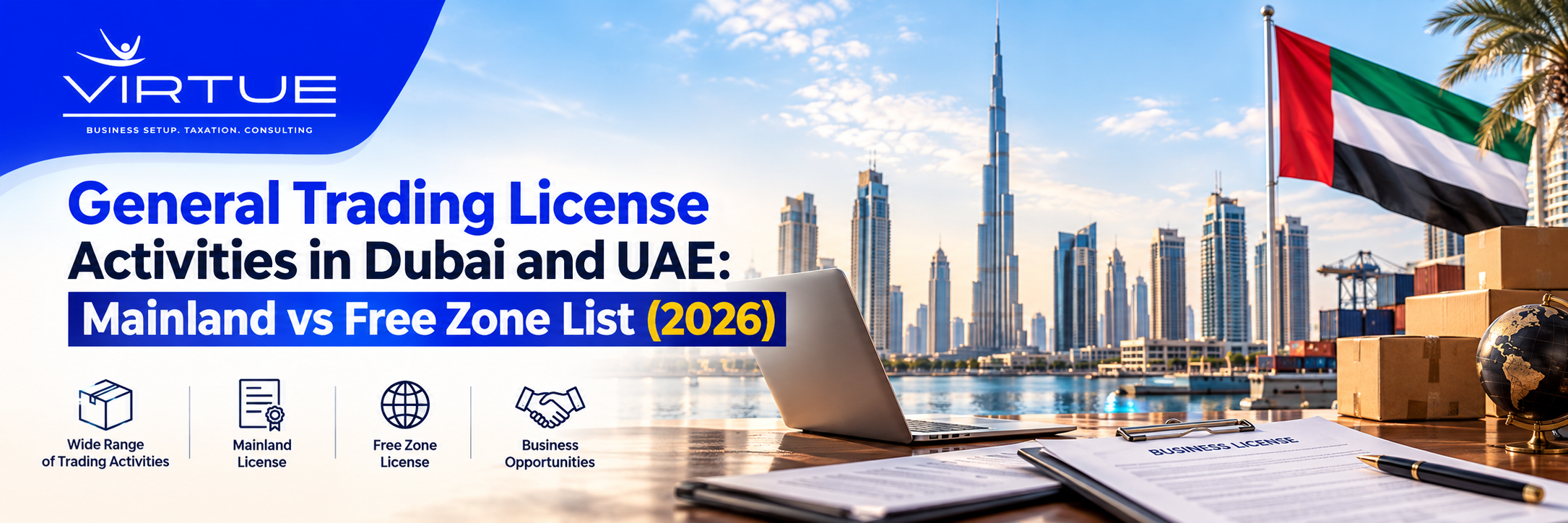
Choosing the right general trading license activities is one of the most important decisions when you set up a trading company in the UAE. The activities you list decide what you can import, sell and distribute, which approvals you need, and even whether you should register on the mainland or in a free zone. This guide explains the activities under a general trading license in Dubai, how they differ between the Dubai mainland and UAE free zones, which goods need extra approval, and how to pick the right combination for your business.
What Does a General Trading License Cover?
A general trading license lets a company trade in several unrelated product categories under one license, instead of being limited to a single type of goods. A business can, for example, deal in electronics, building materials and household products without registering separate companies.
The important point is that general trading is a label used in the market, not a fixed legal category with one standard list. In practice, the activities you can add depend on the licensing authority: the Department of Economy and Tourism (DET, formerly DED) for the Dubai mainland, or the individual authority of each free zone. That is why two companies that both say they hold a general trading license can have different permitted activities.
General Trading License vs Standard Trading License
A standard trading license is usually tied to one product group, such as food items or auto spare parts. A general trading license spreads across several groups. The practical difference shows up when you want to expand.
| Point | Standard trading license | General trading license |
|---|---|---|
| Product range | One product group | Several unrelated groups |
| Flexibility | Limited, a new activity may need an amendment | Higher, suited to diversified traders |
| Typical user | Specialist importer or retailer | Distributor, re-exporter, multi-category trader |
| Approvals | Depends on the goods | Depends on each product you add |
Activity limits and the way groups are counted differ by authority, so always confirm the exact rules with DET or the free zone before you decide.
General Trading License Activities in Dubai Mainland (DET)
On the Dubai mainland, activities are selected from the official DET business activity list through the Invest in Dubai portal. Mainland licenses are generally grouped into commercial, professional and industrial categories, and general trading sits under the commercial category.
Common product groups traders add under a mainland general trading license include:
- Food and beverage items (with the required approval)
- Electronics and electrical appliances
- Textiles, garments and fashion accessories
- Building materials and hardware
- Auto spare parts and accessories
- Cosmetics and personal care products
- Household goods and furniture
- Stationery, packaging and office supplies
Activity names must match the DET list exactly. If you are searching for DED general trading license activities, note that DED is now part of DET, and the list is managed there.
Key advantages of the mainland route:
- You can trade directly with customers anywhere in the UAE market.
- You can open retail outlets, showrooms and warehouses in Dubai.
- You can bid for local government and large corporate contracts.
Key requirements include a registered trade name, initial approval, and an Ejari-registered office or commercial space. Some activities also need external approvals before the license is issued. To see how activities work on the mainland in more detail, read our complete Dubai mainland business activities list or our guide to Dubai mainland company formation.
General Trading Activities in UAE Free Zones
Free zones issue their own licenses, and each zone has its own activity list and its own rules. Many zones offer a general trading license, but the wording, the permitted activities and the exclusions are set by the zone authority.
Here is how the main zones are generally positioned:
| Free zone | Positioning | What to check before choosing |
|---|---|---|
| DMCC | Premium Dubai zone, strong for commodities and international trade | Exclusions such as oil and gas and activities needing third-party approval |
| JAFZA | Premium zone with port and warehouse access | Warehouse and facility requirements |
| Meydan Free Zone | Economical Dubai zone | Permitted trading activities and visa allocation |
| IFZA | Economical Dubai zone | Activity list and office options |
| Dubai South | Economical, logistics focused location | Activity wording and facility options |
| Ajman Free Zone | Northern Emirates, lower entry costs | Published exclusion list for goods |
| RAKEZ | Northern Emirates, trading and industrial options | Activity list and facility needs |
| Sharjah Publishing City (SPC) | Northern Emirates, flexible license types | Activities allowed under each license |
Some zones publish an exclusion list. DMCC, for example, offers broad trading access but excludes oil and gas and activities that need third-party approval, while Ajman Free Zone excludes certain goods such as fuel and vehicles. Always confirm the current exclusions with the zone before you apply.
Can a free zone company sell in the mainland?
Traditionally, a free zone company could not sell directly to customers on the Dubai mainland and had to use a licensed distributor. Dubai has since introduced a framework that lets free zone companies obtain a permit from DET to operate on the mainland, subject to conditions. The rules, fees and eligible activities can change, so confirm the current conditions with DET before you plan your sales model around it. You can see how our team approaches this in our free zone company setup service.
A note on corporate tax
A free zone company benefits from the 0% corporate tax rate only on qualifying income, and only if it meets the Qualifying Free Zone Person conditions. Income that does not qualify is taxed at 9% on net profit above AED 375,000. Trading activities and customer location can affect which income qualifies, so take tax advice before you finalize your activities.
Mainland vs Free Zone: Activities Compared
| Factor | Dubai mainland (DET) | Free zone |
|---|---|---|
| Licensing authority | Department of Economy and Tourism | The individual free zone authority |
| How activities are chosen | From the DET activity list | From the zone’s own activity list |
| Selling inside the UAE | Direct, to any customer | Needs a distributor or a mainland permit |
| Physical premises | Ejari-registered office or space | Flexi-desk, office or warehouse in the zone |
| External approvals | Required for regulated goods | Required for regulated goods, plus zone rules |
| Best suited for | UAE market focus, retail, government contracts | Re-export, international trade, regional distribution |
Activities That Need Extra Approval or Are Restricted
A general trading license does not mean you can trade in every product. Some goods need approval from a specific authority before the license is issued or before you can import and sell. Typically, the following categories require extra approval:
- Food and beverages, usually through the relevant municipality or food authority
- Pharmaceuticals, medical devices and supplements, through the health authorities
- Alcohol, tobacco and pork products, which have special licensing
- Chemicals and hazardous goods
- Arms, ammunition and security equipment
- Regulated commodities and oil and gas related products
Check every product category against its regulator and against the Dubai Customs restricted goods list before you buy stock. A product that looks simple, such as a cosmetic or a food supplement, can still need registration.
How to Choose the Right Activities
Use these questions to choose your activities with confidence:
- Where will you sell? If most customers are in the UAE, the mainland is usually simpler. If you re-export or sell to international buyers, a free zone often fits better.
- How many product groups do you plan to trade? If you plan only one or two related products, a standard trading license may be enough. If your range is wide, general trading gives you room to grow.
- Which approvals will you need? List every product and check its regulator first, so there are no surprises after you apply.
- What are your space needs? Retail needs mainland premises, while a pure trading or re-export model can run from a flexi-desk or warehouse in a zone.
- What is your long term plan? Pick activities you will actually use in the first year, and add others as the business grows, instead of listing everything on day one.
Common Mistakes When Choosing Activities
- Listing products without checking whether they need external approval.
- Choosing a free zone while planning mostly mainland sales.
- Using activity names that do not match the official list exactly.
- Adding many activities you will not use, which can raise costs and compliance questions depending on the authority.
- Choosing activities that do not match your real business. Banks often review your activities and trade flows when you apply for an account, so keep them consistent with what you actually do. Our bank account opening support can help you prepare.
How to Find the Official Activity List
For the mainland, search the business activity list on the DET and Invest in Dubai portal, and match your product to the exact activity name. For a free zone, download the activity list from the zone’s official website or ask the zone for its current schedule. Because activity names and rules are updated, treat any article, including this one, as a planning guide and confirm the final list with the authority.
How Virtue Corporate Services Can Help
Virtue Corporate Services is a Dubai based business setup consultancy that supports entrepreneurs, startups and international traders with company formation, trade licensing, PRO services, visa assistance and banking support. We work with clients from more than 130 countries, and we are an Authorised Channel Partner of Meydan Free Zone.
Our team compares your product list with mainland and free zone activity lists, flags the approvals you will need, and recommends the structure that fits your sales model. Read more about our general trading license in Dubai service, review our guide to trade license types and the application process, or use our cost calculator for an estimate. To discuss your activities, contact us.
Frequently Asked Questions
What activities are allowed under a general trading license in Dubai?
A general trading license allows you to trade in several product groups, such as electronics, building materials, textiles, auto parts and household goods. The exact activities depend on the DET activity list for the mainland or the activity list of your chosen free zone.
Can I add more activities to my license later?
In most cases you can add or amend activities after the license is issued, subject to the authority’s approval and any extra permits the new activity needs. Fees and requirements depend on the authority.
What is the difference between a general trading license and a trading license?
A trading license is usually limited to one product group, while a general trading license covers several unrelated groups under one license. Activity limits and counting rules vary by authority.
Are there goods a general trading license cannot cover?
Yes. Regulated goods such as food, pharmaceuticals, alcohol, tobacco, chemicals and arms need approval from the relevant authority, and some free zones exclude specific goods such as oil and gas altogether.
Can a free zone general trading company sell in the Dubai mainland?
Traditionally it needed a mainland distributor. Dubai now allows free zone companies to apply for a mainland operating permit from DET under set conditions, so check the latest requirements before you plan direct sales.
Which free zone is best for a general trading license?
It depends on your budget, your goods and your sales model. DMCC and JAFZA are premium choices, while Meydan, IFZA and Dubai South are economical Dubai options, and Ajman, RAKEZ and Sharjah Publishing City suit lower entry costs. Our consultants can compare them for your product list.