Most founders notice the limits of a Free Zone setup only when it starts slowing them down. A Free Zone company only works well for a limited amount of time. When it stood working, the problem lies in the business structure, not the business growth.
Many companies outgrow their Free Zone model even before they recognise the signs. This is a guide to help you understand and decide when company formation in Dubai Mainland becomes a smarter move, based on the operational alignment and not emotion.
What Is Company Formation in Dubai Mainland?
Company formation in Dubai Mainland means registering your company with Dubai’s Department of Economy and Tourism (DET) instead of a Free Zone authority. This single change in the registration process creates a big shift in how your business operates.
Subject to licensing requirements, a mainland company can trade directly across the UAE market, work with semi-government entities, and operate from anywhere in Dubai.
Free Zones are designed for a controlled scope of specific jurisdictions, defined activity lists, and structured permissions. This business design is meant for a certain stage and certain business models. The friction comes when your business is operating beyond that intended scope.
Why Free Zones Make Sense Initially (And Why That Changes)
Free Zones are popular. They are faster to set up, easier to navigate in the beginning, and are more predictable for first-time founders. Many businesses choose them because they allow 100% foreign ownership, offer simplified licensing pathways, and have lower initial setup costs depending on the zone and package.
But Free Zones are only launchpads and not the highways. Once the revenue stabilises, your client base expands, and your operating model becomes more “UAE-facing”, constraints start showing up. They affect sales cycles, compliance steps, and delivery operations. This is where company formation in Dubai mainland becomes a structural upgrade.
Signal 1: You Want to Trade Directly in the UAE Market
Many Free Zone entities can’t trade directly with mainland UAE customers unless they use a distributor, an agent, or specific approvals, depending on the activity. In real life, it creates added cost, dependency, and delays. Especially when you are negotiating contracts, invoices, delivery terms, and payment cycles.
With company formation in Dubai mainland, you can send invoices to the clients directly. You can also sign contracts without any intermediaries and run a cleaner deal execution. The result is beyond just access. You get to experience faster sales cycles, fewer middle layers, and more control over revenue operations.
Signal 2: Government Contracts Enter the Growth Plan
If your growth path involves government tenders, semi-government entities, or public sector projects, your business structure needs to match that opportunity. Free Zone entities are restricted from various government contract frameworks or face additional eligibility hurdles. Mainland companies generally align better with tender requirements and procurement expectations.
Structural mismatch often becomes costly in sectors such as infrastructure, regulated services, education, healthcare, or large institutional supply. At such a point, company formation in Dubai mainland is a necessary alignment move.
Signal 3: Your Model Requires Physical Presence and Scaling
Free Zone constraints can feel tight if your business requires a retail outlet, a warehouse, a client-facing office, or on-ground service delivery across various locations. Along with the workload, workarounds usually increase the operational cost and compliance. Especially when you expand locations, add staff or scale logistics.
Flexible office location choices, branch expansion, and UAE-wide operational planning is typically allowed in the mainland structure. This is less about paperwork and more about control.
Free Zone vs Mainland: The Real Structural Difference
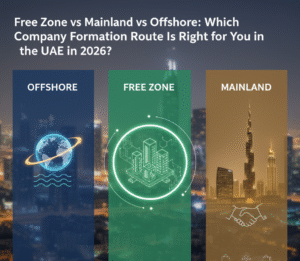
The decision is not about setup cost alone. It is about the alignment when you make money. Free Zones often work best for models that are export-driven, have niche activity scopes, are digital-first services, or are businesses that don’t need broad UAE market access. Mainland structures are made for full UAE trading, larger client bases, government eligibility requirements, and long-term operational scale.
If you are repeatedly “patching” limitations, it’s usually a sign the structure is no longer aligned.
The Risk of Moving Too Late
Many businesses try to avoid paperwork while delaying this transition. Instead of fixing the core issue, they keep adding distributors, temporary approvals, and operational exceptions. It creates missed contracts, deal delays, compliance complications, and inefficient cost structures over time.
Company formation in Dubai Mainland works as a proactive step. When done early, it simplifies business growth. If done late, it becomes a corrective action after the friction has already cost time and money.
How the Transition Typically Works
The transition is procedural and needs accuracy. It begins with reviewing activities and confirming that they align with the correct mainland license category. Then you move through trade name approvals, drafting compliant MOA documentation, obtaining initial DET approvals, and finalising office lease requirements (Ejari, where applicable). Once the trade license is issued, you update banking, tax registrations, and operational records so everything remains consistent.
Where most delays occur is notin intent—it’s execution. Small mismatches in activity mapping, paperwork, or approvals can slow the process.
Special Cases to Plan For
Some transitions require extra structuring. Foreign-owned entities must ensure ownership and activity permissions are correctly aligned. SMEs need tighter cost planning and realistic visa and office assumptions. Group structures sometimes benefit from a dual setup—keeping the Free Zone entity while opening a mainland arm for UAE trading. If tax efficiency is a priority, corporate tax positioning must be reviewed carefully because both Free Zone and mainland structures can be efficient—but only when set up correctly.
Free Zone may stop being strategic if your business targets UAE clients, expects to pursue government work, needs physical operations or is designed for scale.
In those cases, Company Formation in Dubai Mainland is not just about compliance—it’s about positioning your business to grow without structural friction.
Talk to us today to help you transition your business: https://virtuebizsetup.ae/